
Best Gallbladder Surgeon in Bangalore: Expert Care & Advanced Surgery
11/16/2026
Gallbladder problems can begin with a little discomfort. A pain after meals. An unexpected episode of nausea. A sharp sensation beneath the right side of your ribs.
Sometimes, these symptoms are caused by gallstones. Sometimes, they point to inflammation or another condition affecting the gallbladder.
Whatever the cause, the right diagnosis makes a difference.
If you are searching for the Best Gallbladder Surgeon in Bangalore, understanding your treatment options is the first step towards making an informed decision.
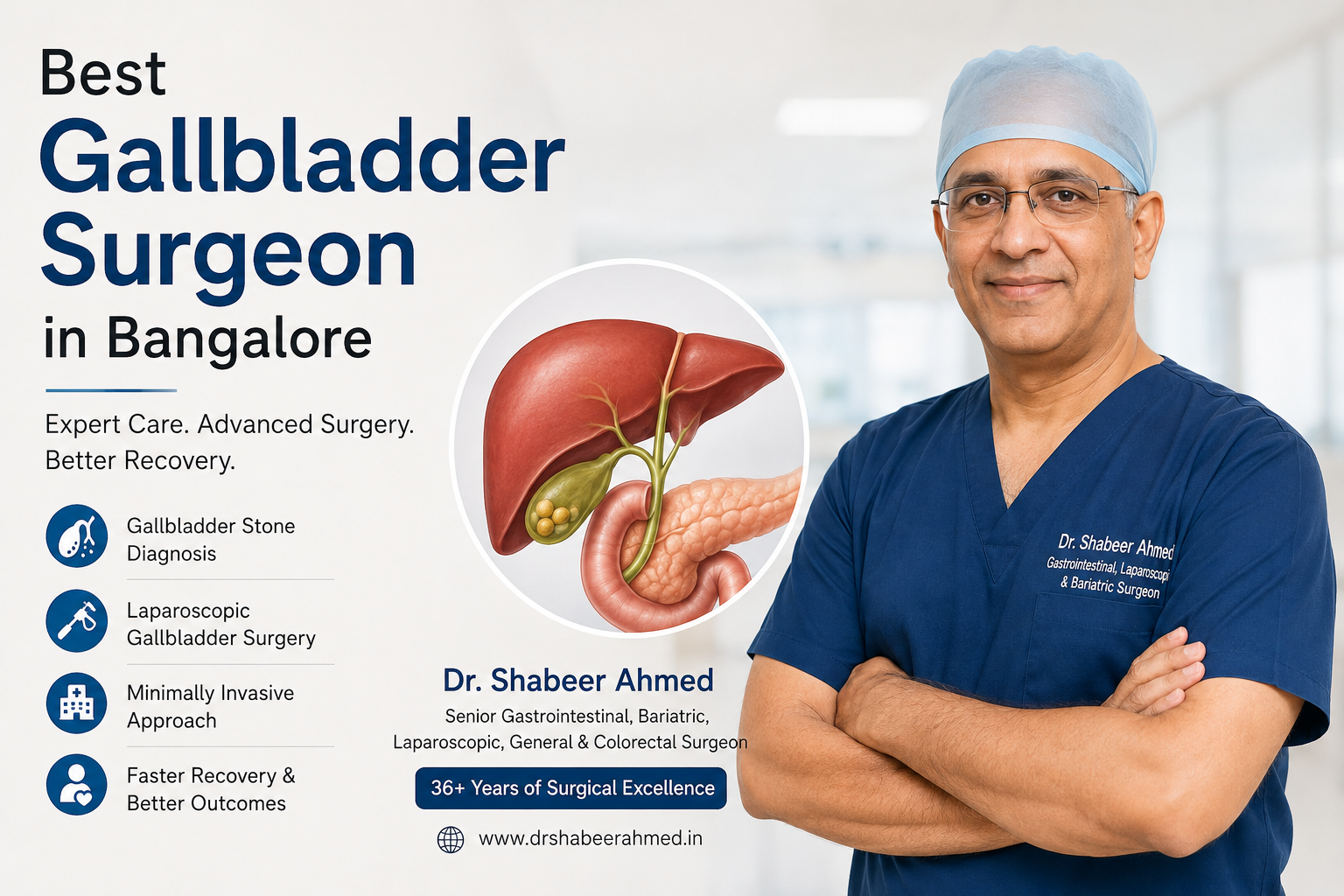
Dr. Shabeer Ahmed is an experienced Gastrointestinal and Laparoscopic Surgeon with over 36 years of surgical experience. His expertise includes advanced laparoscopic and gastrointestinal procedures, with a focus on careful assessment and appropriate surgical care.
Let's understand gallbladder conditions, available treatments and what to consider when choosing a specialist.
Table of Contents
Understanding the Gallbladder and Its Function
What Causes Gallbladder Problems?
Common Symptoms of Gallbladder Disease
When Should You Consult a Gallbladder Specialist in Bangalore?
How Are Gallbladder Problems Diagnosed?
Gallbladder Surgery Bangalore: Understanding Your Options
Benefits of Laparoscopic Gallbladder Surgery
Recovery After Gallbladder Removal
Choosing the Right Gallbladder Surgeon
Conclusion
Frequently Asked Questions
1. Understanding the Gallbladder and Its Function
The gallbladder is a small, pear-shaped organ located beneath the liver. Its primary function is to store and concentrate bile, a digestive fluid produced by the liver.
When you eat, particularly foods containing fat, the gallbladder releases bile into the small intestine. This helps your body digest fats.
Although small, the gallbladder plays an important role in digestion.
However, gallstones, inflammation and blockages can interfere with its function. When these conditions cause persistent symptoms or complications, medical or surgical treatment may be necessary.
2. What Causes Gallbladder Problems?
Gallbladder conditions can develop for several reasons. One of the most common is the formation of gallstones.
Gallstones are hardened deposits that develop when substances in bile, such as cholesterol or bilirubin, become imbalanced.
Common contributing factors include:
Excess cholesterol in bile: Too much cholesterol can form crystals that gradually develop into stones.
Rapid weight loss: Significant weight changes can affect bile composition.
Obesity: Excess body weight can increase the likelihood of gallstone formation.
Age and hormonal factors: Gallstone risk increases with age and certain hormonal changes.
Incomplete gallbladder emptying: Poor emptying can contribute to the formation of stones.
Not everyone with gallstones experiences symptoms. Some people discover them during scans performed for unrelated conditions.
The need for treatment depends on symptoms, clinical findings and the risk of complications.
3. Common Symptoms of Gallbladder Disease
Gallbladder problems do not always produce noticeable symptoms. However, when gallstones block the flow of bile, they can cause significant discomfort.
Look out for these warning signs:
Pain in the upper-right abdomen.
Abdominal discomfort after eating fatty meals.
Pain that spreads towards the back or right shoulder.
Nausea and vomiting.
Bloating and indigestion.
Fever or chills when inflammation or infection develops.
Yellowing of the skin or eyes (jaundice) if bile flow is obstructed.
Persistent abdominal pain should not be ignored.
Severe pain, fever, repeated vomiting or jaundice requires urgent medical assessment. These symptoms may indicate a complication that needs prompt treatment.
4. When Should You Consult a Gallbladder Specialist in Bangalore?
Not every gallstone requires surgery. However, symptomatic gallstones and certain gallbladder complications need specialist attention.
You should consider consulting a Gallbladder Specialist in Bangalore if you experience:
Repeated episodes of abdominal pain.
Diagnosed gallstones with symptoms.
Gallbladder inflammation (cholecystitis).
Suspected bile duct obstruction.
Recurrent digestive discomfort associated with gallbladder disease.
An experienced surgeon evaluates your symptoms, medical history and investigation reports before recommending treatment.
The goal is simple: understand the condition, identify the safest treatment approach and help you make an informed decision.
5. How Are Gallbladder Problems Diagnosed?
Accurate diagnosis is essential before planning treatment.
A gallbladder specialist may recommend the following investigations:
Abdominal Ultrasound
An ultrasound is commonly used to identify gallstones, assess gallbladder inflammation and examine the surrounding structures.
Blood Tests
Blood investigations, including liver function tests, can help identify signs of inflammation, infection or possible bile duct obstruction.
MRCP (Magnetic Resonance Cholangiopancreatography)
MRCP may be recommended when additional assessment of the bile ducts is needed, particularly if a bile duct stone is suspected.
Clinical Evaluation
Your symptoms, medical history, physical examination and investigation results help determine the most appropriate treatment plan.
Every patient is different. The investigations required depend on the clinical situation.
6. Gallbladder Surgery Bangalore: Understanding Your Options
When gallstones cause recurring symptoms or complications, surgery may be recommended.
The standard surgical treatment for symptomatic gallstones is called cholecystectomy, which involves removing the gallbladder.
There are two main surgical approaches.
Laparoscopic Cholecystectomy
Laparoscopic gallbladder surgery is a minimally invasive procedure performed through small abdominal incisions.
A laparoscope, equipped with a camera, allows the surgeon to view the surgical area on a monitor. Specialised instruments are used to remove the gallbladder.
For many patients, this approach offers:
Smaller surgical incisions.
Less postoperative discomfort compared with open surgery.
Shorter hospital stays in suitable cases.
Faster recovery for many patients.
Earlier return to routine activities.
Open Gallbladder Surgery
In certain situations, open surgery may be more appropriate.
This involves a larger abdominal incision to access and remove the gallbladder. It may be necessary in complicated cases, depending on inflammation, infection, previous surgery or other clinical findings.
The choice between laparoscopic and open surgery depends on patient safety and the surgeon's assessment.
7. Benefits of Laparoscopic Gallbladder Surgery
Modern surgical techniques have made gallbladder removal more precise and less invasive for suitable patients.
Some important benefits include:
Feature | Laparoscopic Surgery |
Incisions | Small abdominal incisions |
Surgical approach | Camera-assisted procedure |
Postoperative discomfort | Often less than open surgery |
Hospital stay | Often shorter |
Recovery | Generally faster |
Scarring | Usually smaller scars |
Return to activities | Often earlier, depending on recovery |
Although laparoscopic surgery offers several advantages, it is still a surgical procedure with potential risks.
These can include bleeding, infection, bile leakage, injury to nearby structures and complications related to anaesthesia. Your surgeon will explain the benefits and risks before treatment.
8. Recovery After Gallbladder Removal
Recovery is an important part of successful surgical care.
Most patients undergoing uncomplicated laparoscopic gallbladder removal recover faster than those undergoing open surgery. However, recovery time varies according to individual health, the complexity of surgery and postoperative progress.
Here are some general recovery considerations:
First Few Days
Mild abdominal discomfort, tiredness and temporary digestive changes may occur. Follow your surgeon's instructions regarding medication, movement and food.
First Week
Many patients gradually resume light daily activities. Heavy lifting and strenuous exercise should be avoided until medically cleared.
Following Weeks
Your activity levels can gradually increase according to your recovery and medical advice.
Can You Live Normally Without a Gallbladder?
Yes. The gallbladder is not an essential organ.
After removal, bile flows directly from the liver into the small intestine. Most people can return to their usual eating habits over time.
Some patients may experience temporary bloating or changes in bowel movements. Your doctor can advise you on managing these changes.
9. Choosing the Right Gallbladder Surgeon in Bangalore
Choosing a surgeon is an important healthcare decision. Experience matters, but so do communication, surgical judgement and an individualised treatment approach.
When evaluating a Gallbladder Specialist in Bangalore, consider:
Surgical experience: Look for relevant experience in gastrointestinal and laparoscopic surgery.
Clinical assessment: Your surgeon should carefully evaluate your symptoms and investigation reports.
Treatment options: Understand whether laparoscopic or open surgery is appropriate for your condition.
Clear communication: You should feel comfortable discussing your diagnosis, treatment and recovery.
Postoperative guidance: Follow-up care and recovery instructions are important parts of treatment.
Meet Dr. Shabeer Ahmed
Dr. Shabeer Ahmed is a senior Gastrointestinal, Bariatric, Laparoscopic, General and Colorectal Surgeon with over 36 years of surgical experience.
His professional background includes advanced laparoscopic surgery and international surgical experience, including work at Queen Elizabeth Hospital, Birmingham.
His areas of expertise include gastrointestinal surgery, bariatric surgery and advanced laparoscopic procedures.
For patients exploring Gallbladder Surgery in Bangalore, a consultation can help establish the diagnosis, discuss available surgical options and determine an appropriate treatment plan.
Visit the official website to learn more:
Conclusion
Gallbladder problems deserve the right attention, at the right time.
Whether you have recently been diagnosed with gallstones or are experiencing recurring abdominal discomfort, an accurate diagnosis is the starting point for effective treatment.
Modern laparoscopic techniques offer a minimally invasive option for many patients who require gallbladder removal.
If you are looking for the Best Gallbladder Surgeon in Bangalore, take time to understand your condition, evaluate the surgeon's experience and discuss your treatment options.
With informed decisions and appropriate surgical care, you can take the next step towards better digestive health.
Dr. Shabeer Ahmed – Experienced Gastrointestinal and Laparoscopic Surgeon in Bangalore.
Website: https://drshabeerahmed.in/
Frequently Asked Questions (FAQs)
1. Who is the best gallbladder surgeon in Bangalore?
Choosing the right gallbladder surgeon depends on surgical experience, clinical expertise, treatment approach and patient requirements. Dr. Shabeer Ahmed is an experienced Gastrointestinal and Laparoscopic Surgeon with over 36 years of surgical experience.
2. When is gallbladder surgery necessary?
Gallbladder surgery is commonly recommended when gallstones cause recurring pain, inflammation or other complications. Patients with asymptomatic gallstones may not require immediate surgery. A specialist can determine the appropriate course of treatment.
3. Is laparoscopic gallbladder surgery safe?
Laparoscopic gallbladder surgery is a widely performed procedure and is generally safe for suitable patients. Like every operation, it carries potential risks. Your surgeon will assess your health and explain the procedure before recommending surgery.
4. How long does it take to recover from gallbladder surgery?
Recovery depends on the surgical technique and individual health. Many patients return to light activities within a few days and gradually resume normal routines over the following weeks. Your surgeon will provide specific recovery instructions.
5. Can I live a normal life after gallbladder removal?
Yes. Most people live normal, healthy lives without a gallbladder. The liver continues producing bile, which flows directly into the small intestine. Some people experience temporary digestive changes after surgery, which usually improve over time.